
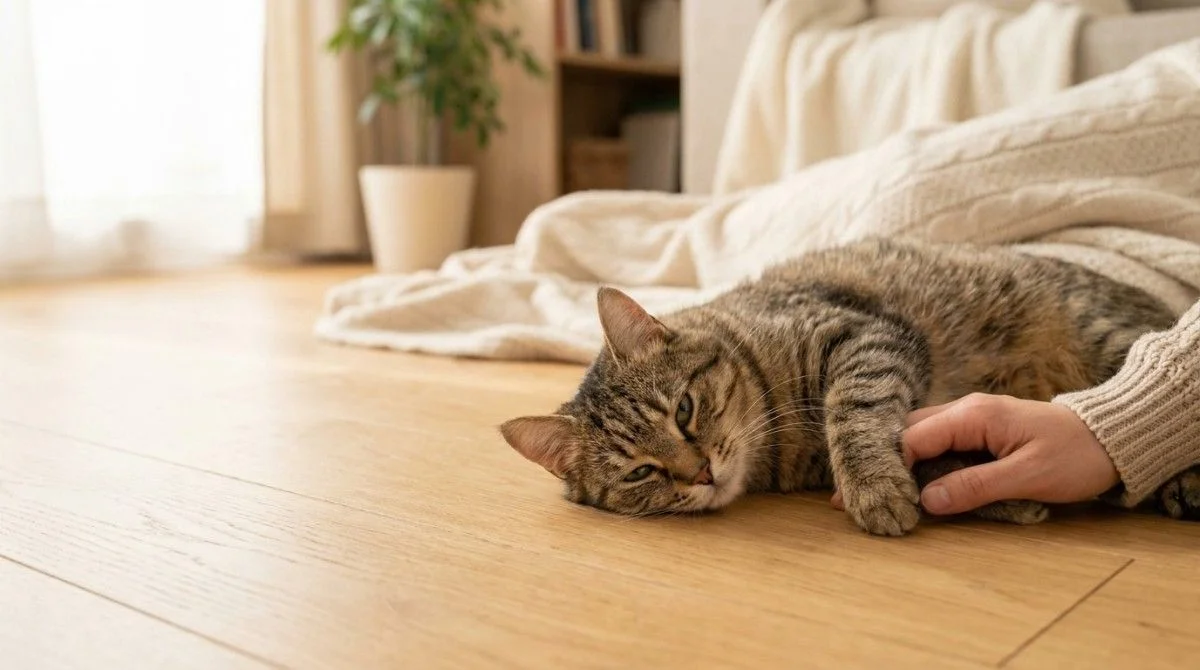
Why is my cat vomiting? Learn what’s normal, what’s a warning sign, and when to call the vet. Simple, clear tips to help your cat fast.
Why Is My Cat Cat Vomiting?
Why is my cat vomiting, and should I be worried? It is scary to see. One minute your cat is fine. The next minute, there is a mess on your rug. The good news is that many cats throw up for small, simple reasons. The bad news is that a few causes are serious. This guide will help you tell the difference.
You will learn what cat vomit looks like, what each color can mean, and when to call your veterinarian. You will also learn what to do at home, how to stop it from happening again, and what to do in a U.S. emergency.
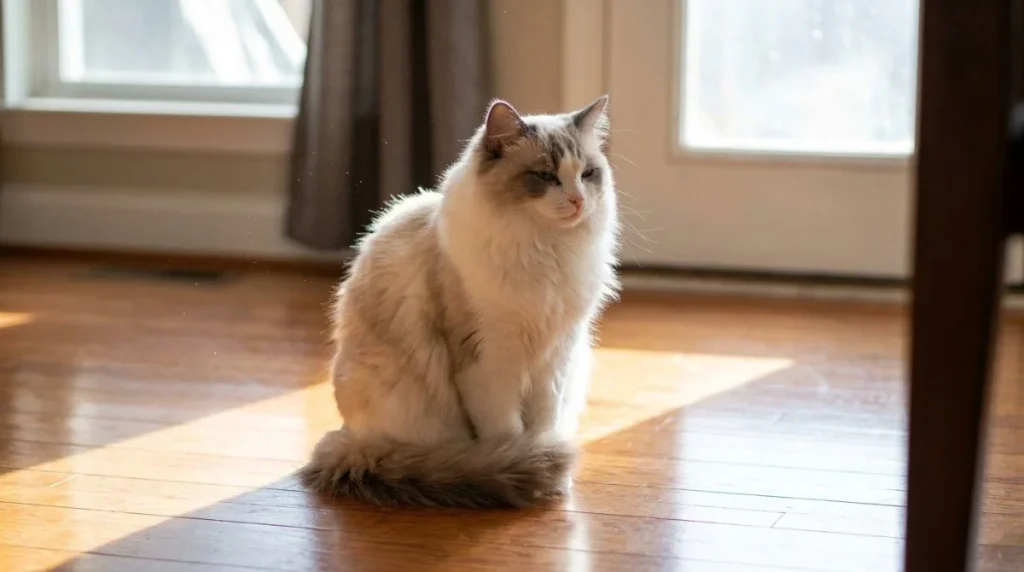
Quick Guide: What Your Cat Vomiting Can Tell You
| What you see | What it often means | What to do |
| Clump of hair, shaped like a tube | A hairball | Normal now and then. Brush your cat more. |
| Yellow or green liquid | Bile from an empty stomach or upset belly | Offer a small meal. Call the vet if it repeats. |
| White foam | Empty or irritated stomach | Watch closely. Call the vet if it keeps happening. |
| Clear liquid | Water or stomach fluid | Watch your cat. Call the vet if it happens more than once. |
| Whole food soon after eating | Eating too fast | Use a slow feeder and smaller meals. |
| Red, pink, or dark like coffee grounds | Blood | Call a vet right away. |
Is It Normal for a Cat to Throw Up?
Why is my cat vomiting? A little bit, yes. Many cats throw up once in a while. It can be from a hairball, a meal eaten too fast, or a small tummy upset.
But “normal” does not mean “fine every time.” Vets say that vomiting more than once a month is worth a call, as this veterinary guide to vomiting in cats explains. Some pet sites say a hairball every week or two is common. Vets do not all agree on the exact number. So here is a safe rule: if it happens often, or it is new for your cat, ask your vet.
Here is another way to think about it. Vomiting is a sign. It is not a disease on its own. Something is bothering your cat’s body. Your job is to figure out if it is small or big.
Cat Vomiting, Regurgitation, or Coughing? How to Tell
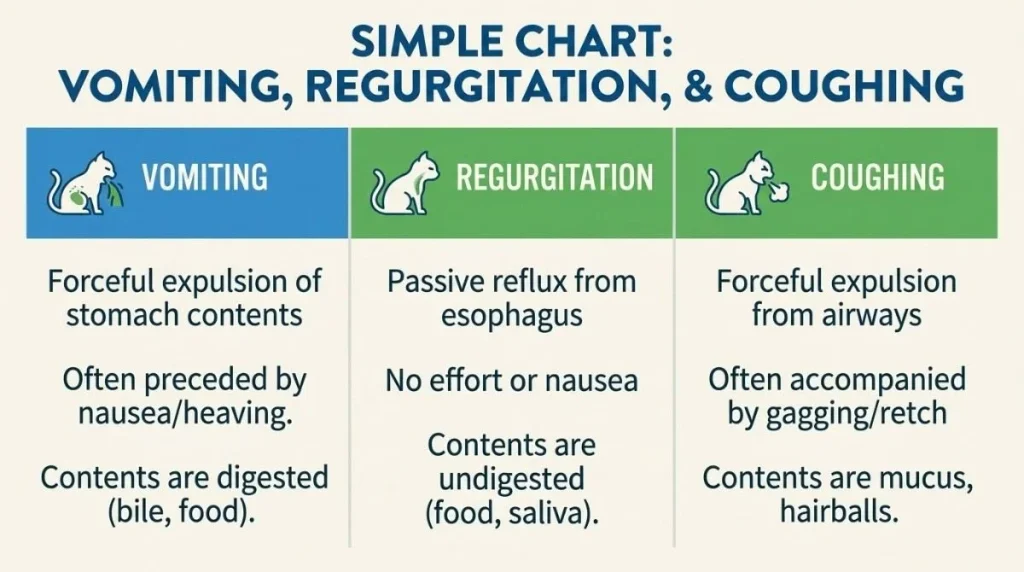
Why is my cat vomiting? Before you look for causes, make sure your cat is really vomiting. Three things look alike.
True cat vomiting
Vomiting is active. Your cat’s belly heaves. Before it happens, you may see drooling, licking of lips, or lots of swallowing. The cat is nauseous. Then the stomach pushes everything out.
Regurgitation
Regurgitation is different. It is quiet and quick. Food comes up from the throat tube, not the stomach. There is little warning. The food is often whole and shaped like a tube. It may look like a little log.
Coughing
Coughing can look like throwing up. The cat crouches low and stretches its neck. But a cough brings up little or nothing, maybe a bit of foam. Repeated coughing can point to asthma or a lung problem, so tell your vet.
This matters because each one has different causes. Your vet will ask which one you saw. If you can, take a short video on your phone. It helps a lot.
Common Reasons Cats Throw Up (Usually Mild)
Let’s start with the easy ones. These are the most common causes of acute vomiting, which means it starts suddenly.
Hairballs
Cats clean themselves with their tongues. The tongue has tiny hooks. They pull loose hair off the coat. The cat swallows it. Some hair passes through. Some stays in the stomach and forms a hairball.
Long-haired cats get more hairballs. A hairball can look like a wet, twisted tube of fur. Brushing your cat often helps. So do special hairball diets and treats.
Watch out, though. If your cat keeps trying to cough up a hairball and nothing comes out, call the vet. That can mean a blockage.
Eating Too Fast
Some cats gulp their food. They swallow air with it. Dry food also swells in the stomach. Then up it comes, often within minutes. The vomit looks like whole food.
A slow feeder bowl or a puzzle feeder helps a lot. Smaller meals spread through the day can help too. You can also spread the food flat on a plate.
A Sudden Food Change
Cats have sensitive stomachs. A new food can upset them. The best way to switch is slowly. Mix a little new food with the old food. Add a bit more each day for about a week or so.
Eating Grass or Plants
Many cats chew grass. Some throw it up afterward. This is usually harmless. But some plants are toxic plants for cats. Check the ASPCA toxic and non-toxic plants list for cats before you bring a new plant home. We will talk about other dangers below.
Stress
Cats like routine. A move, a new pet, loud noise, or a new baby can upset them. Stress can lead to an upset stomach. If you think stress is the cause, keep the day calm. Give your cat a quiet place to hide. Keep feeding times steady.
Medical Reasons Cats Throw Up
Sometimes vomiting points to a health problem. These causes often lead to chronic vomiting. That means vomiting that keeps coming back for days or weeks.
Parasites
Intestinal parasites, like worms, can upset a cat’s gut. Kittens and outdoor cats get them more often. Your vet can test a stool sample and give the right medicine.
Food Allergies and Food Intolerance
Some cats react to certain foods. Common triggers are certain proteins or added ingredients. The signs can be vomiting, loose stool, or an itchy coat. Your vet may suggest a special diet trial. Do not guess and change foods on your own for long. It can make the problem harder to solve.
Inflammatory Bowel Disease (IBD)
Inflammatory bowel disease, or IBD, means the gut is swollen and irritated for a long time. It can cause vomiting, weight loss, and poor appetite. It cannot be cured, but it can often be managed. Early care helps.
Kidney Disease
Kidney disease is common in older cats. Early signs can be drinking more water, peeing more, losing weight, and vomiting. The kidneys clean the blood. When they slow down, waste builds up. That can make a cat feel sick.
Hyperthyroidism
Hyperthyroidism means the thyroid gland makes too much hormone. It is often seen in older cats. The body speeds up. Signs can be weight loss even with a big appetite, more thirst, and vomiting.
Pancreatitis
Pancreatitis is swelling of the pancreas. It can cause belly pain, low energy, no appetite, and vomiting. It needs a vet’s care.
Other Causes
Diabetes, liver disease, infections, and tumors can also cause vomiting. That is why a vet visit matters when vomiting lasts. Only tests can show what is going on inside.
Emergency Causes You Should Never Ignore
Some causes are urgent. Learn these well.
Intestinal Blockage
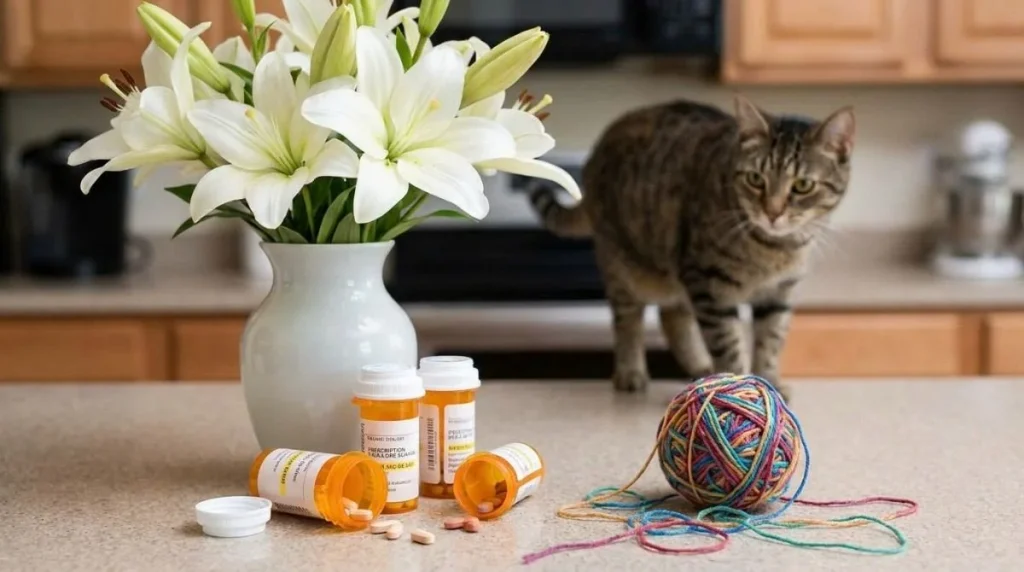
Cats love to play with string, hair ties, ribbon, and small toys. Sometimes they swallow them. The object can get stuck and cause an intestinal blockage. Signs include repeated vomiting, no appetite, a sore belly, and hiding. String is very dangerous. Do not pull on a string hanging from your cat’s mouth or rear. Go to a vet.
Poisoning
Cats can get poisoned by plants, human medicine, cleaners, and some foods. Lilies are a big danger for cats. Even a little pollen or vase water can harm the kidneys. Other risks include antifreeze, rat poison, and medicines like ibuprofen and acetaminophen. Never give your cat human medicine unless your vet tells you to.
Urinary Blockage
This one is most common in male cats. If your cat vomits and also strains in the litter box with little or no pee, go to an emergency vet at once. This can be life-threatening within hours.
What the Color of Cat Vomiting Can Mean
The table at the top gives a quick look. Here is a bit more detail.
Yellow or Green Cat Vomiting
This is usually bile. Bile is a fluid from the liver. It shows up when the stomach is empty. One time is often not a big deal. If it happens often, especially in the early morning, tell your vet.
White Foam
Foam often means an empty or upset stomach. It can also come with drooling if the cat is nauseous. If the foamy episodes keep coming, get your cat checked. The stomach lining may be irritated.
Clear Liquid
Clear vomit may be stomach fluid or water your cat drank too fast. If it keeps happening, call your vet.
Red, Pink, or Dark Cat Vomiting
This can mean blood. Blood can come from the mouth, throat, or stomach. Dark, gritty vomit that looks like coffee grounds can be old blood. Call a vet right away.
Brown Cat Vomiting With a Bad Smell
Brown vomit can be from food. But a strong bad smell, along with repeated vomiting, can point to a problem in the gut. Call your vet if you see this.
When to Call the Vet: Red Flags vs. Watch-at-Home Signs
This is the part most people want. Here is a simple way to sort it out.
Call a vet now if you see:
- Blood in the vomit
- Vomiting three or more times in one day
- Vomiting along with lethargy (your cat is very sleepy or weak)
- No eating or drinking for 12 hours or more
- A swollen, painful belly
- Repeated tries to vomit with nothing coming up
- Straining in the litter box
- Signs of dehydration, such as dry gums or sunken eyes
- Any chance your cat ate a poison, string, or a human medicine
- A kitten, a senior cat, or a cat with a health problem that vomits more than once
You can watch at home if:
- It happened one time
- Your cat is bright, playful, and hungry afterward
- The vomit was a hairball or whole food from eating fast
- There is no blood, no belly pain, and no other signs
Even then, keep watching for the next day. If anything changes, call your vet. You know your cat best. If something feels off, trust that feeling.
Vomiting is not the only sign of illness. Sneezing and watery eyes can also be a warning, so read our cat sneezing and watery eye guide to learn what to watch for.
What to Do at Home After Your Cat Vomiting
If your cat seems fine otherwise, here are some gentle steps. These are general tips, not a replacement for your vet.
1. Stay calm and look closely
Note what the vomit looks like, when it happened, and what your cat ate before. Take a photo. It helps your vet.
2. Pick up the mess and check it
Look for hair, plant bits, string, or pieces of toys. Clean up well so your cat does not eat it.
3. Give a short food break, only if your vet agrees
Some vets say to pause food for a few hours so the stomach can rest. But do not fast a cat for long. Cats can get sick from going too long without food, especially overweight cats. Kittens, seniors, and cats with diabetes should not be fasted without vet advice. When in doubt, call first.
4. Offer small sips of water
Dehydration is a real risk with vomiting. Let your cat drink small amounts. Do not force it.
5. Restart slowly
After a rest, offer a small amount of food. If your cat keeps it down, give small meals through the day.
6. Never give human medicine
Some common human drugs are toxic to cats. This includes many pain medicines and some stomach medicines. Always ask a vet first.
What Will the Vet Do?
Knowing what to expect can ease your worry. Your vet will likely:
- Ask questions. How long has it gone on? What does the vomit look like? Did your cat eat anything odd?
- Do a physical exam. The vet checks your cat’s belly, gums, weight, and hydration.
- Run tests. Common tests are blood work, a urine test, and a stool test. Some cats need an X-ray or an ultrasound to look for blockages or other problems.
- Start treatment. This may mean anti-nausea medicine, fluids under the skin or through a vein, a special diet, or treatment for the cause.
Many cases of sudden vomiting get better in about a day with proper care. But if the cause is deeper, the vet will make a plan for it.
How to Help Stop Cat Vomiting Before It Starts
You cannot prevent every case. But these habits can cut down on trips to the vet.
- Brush your cat often. Less loose hair means fewer hairballs.
- Use a slow feeder. It stops gulping.
- Feed smaller meals. Two or more small meals can be easier on the stomach.
- Change food slowly. Take about a week.
- Keep dangers out of reach. Put away string, hair ties, rubber bands, and small toys.
- Skip the lilies. Do not keep them in a home with cats. Check any plant before you bring it in.
- Lock up medicine and cleaners.
- Keep up with vet visits. Yearly checkups can catch kidney and thyroid problems early. Senior cats may need checks twice a year.
- Reduce stress. Keep routines steady and give your cat a safe space.
- Good daily care can prevent many tummy problems. Our complete guide to healthy and happy cats covers food, grooming, and checkups.
Cat Vomiting in the U.S : Emergency Help and Practical Tips
If you live in the U.S., a few tools are good to know about before you ever need them.
- Find an emergency vet now. Save the name and number of a 24-hour animal hospital near you. Many regular clinics close at night and on weekends.
- Poison hotlines. The ASPCA Animal Poison Control Center (888-426-4435) and the Pet Poison Helpline (855-764-7661) take calls all day and night. They may charge a fee. Check their sites for the latest details.
- Watch for costs. Emergency visits often cost more than regular visits. Pet insurance or a pet savings fund can help. Ask the clinic for an estimate.
- Know your cat’s home medicines and foods. Keep a list on your phone. The vet will ask.
- Ask about telehealth. Some U.S. vets offer video visits for mild problems. A video visit cannot replace an exam if your cat seems very sick.
Special Note: Kittens and Senior Cats
Kittens can get sick fast. They are small, so they dry out quickly. If a kitten vomits more than once, call the vet the same day.
Senior cats are more likely to have kidney disease, thyroid problems, or other health conditions. For older cats, frequent vomiting is never something to “wait and see” for long.
Final Thoughts
Most of the time, a cat throwing up once is not a big deal. A hairball, a fast meal, or a small upset can be the cause. But a cat that vomits often, looks weak, or shows blood needs a vet. When in doubt, call. A quick phone call can save your cat a lot of pain, and save you a lot of worry. Want more help with your cat’s health? Browse our cat health and care guides.
Frequently Asked Questions
Why is my cat vomiting undigested food but acting normal?
Undigested food usually means your cat ate too fast, ate too much, or brought food back up before it reached the stomach (regurgitation). If your cat acts normal and it happens rarely, try a slow feeder and smaller meals. If it happens often, see your vet.
Why is my cat vomiting white foam and not eating?
White foam often means an empty or irritated stomach. If your cat also refuses food, it may be nauseous or sick. A cat that vomits foam and skips meals for 12 hours or more needs a vet visit. Causes can include infection, pancreatitis, kidney problems, or a blockage.
Why is my cat vomiting yellow liquid and not eating?
Yellow liquid is usually bile. Bile plus a lost appetite is a warning sign, so don’t wait it out. Call your vet the same day. Possible causes include pancreatitis, liver or kidney disease, and a blockage. Kittens and senior cats should be seen sooner.
What are safe home remedies for cat vomiting?
For a healthy adult cat with mild, one-time vomiting, ask your vet about a short food break, offer small sips of water, then restart with small meals. Use a slow feeder and brush away loose fur. Never give human medicine, milk, or essential oils. If vomiting repeats, call your vet.
Vomiting in cats: when should I worry?
Worry if your cat vomits three or more times in a day, brings up blood, seems weak or in pain, stops eating or drinking for 12 hours, or strains to pee. Also worry if your cat may have eaten a toxin or string. Frequent vomiting needs a vet check, even if your cat seems fine.
What does cat vomit color mean?
Yellow or green usually means bile. White foam means an empty or irritated stomach. Clear liquid is stomach fluid or water. Whole food points to eating too fast. Red, pink, or coffee-ground vomit can mean blood, which needs a vet right away.