
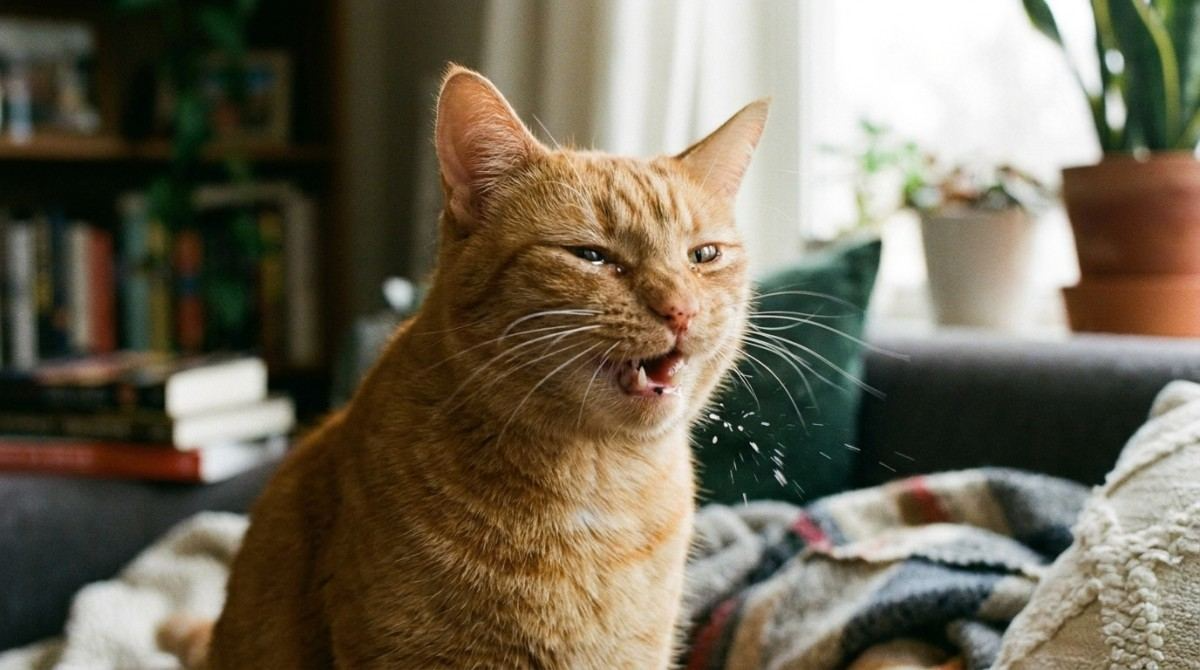
Is your cat sneezing and has a watery eye? Learn the real causes, safe home care, and the exact signs that mean it’s time to call the vet.
Cat Sneezing and Watery Eye:
Few things worry a cat owner faster than a small sneeze followed by a shiny, wet eye. If you searched for cat sneezing and watery eye because your own cat is doing this right now, take a breath.
In most cases, this combo is mild and gets better on its own. But sometimes it means your cat needs real help. This guide walks you through both sides of that story, in plain, simple words, so you know exactly what to watch for and what to do next.
Cats show us they’re unwell through small signs, not big ones. A sneeze here. A drippy eye there. Your job isn’t to guess. It’s to notice the pattern and act at the right time. That’s what this article will help you do.
Quick Look: Mild vs Serious
Use this short table to get a fast read on where your cat stands right now.
| Sign | Likely Mild | Needs a Vet Visit |
| Eye discharge | Clear and watery | Yellow, green, or bloody |
| Appetite | Normal, eating well | Refusing food for a day or more |
| Energy | Playful, alert | Tired, hiding, weak |
| Breathing | Quiet and easy | Fast, loud, or open-mouth |
| How long it lasts | Under a week | More than 10 days, or getting worse |
If your cat lands mostly in the left column, home care is a reasonable first step. If even one sign lands in the right column, call your vet.
What Causes a Cat Sneezing and Watery Eyes Together?
The nose and eyes in a cat are connected by tiny tubes called tear ducts. This is why one problem often shows up in both places at once. Here are the main reasons behind cat sneezing and watery eyes causes.
Upper Respiratory Infections (The Most Common Cause)
Most of the time, a cat with a runny eye and a sneeze has a simple upper respiratory infection, often called a cat cold. Two viruses cause most of these cases: feline herpesvirus and feline calicivirus. These viruses irritate the nose and eyes at the same time, which is exactly why both symptoms show up together.
A cat cold usually clears up in about seven to ten days with rest, warmth, and good food. Kittens, older cats, and cats with weak immune systems may need more help.
Allergies and Irritants
Just like people, cats can react to things in the air. Dust, pollen, smoke, scented candles, and even strong cleaning sprays can trigger sneezing and watery eyes in cats. Allergy symptoms tend to come and go, especially after cleaning day or during high-pollen weeks.
Unlike a cold, allergies rarely cause a fever or tiredness. Your cat may sneeze in short bursts, then act completely normal a few minutes later.
Eye-Specific Problems
Sometimes the eye is the actual problem, and the sneeze is just a minor side effect. Conjunctivitis (an inflamed, pink-looking eye), a scratch on the eye’s surface, or a blocked tear duct can all cause tearing on their own. These issues often affect just one eye, not both.
Dental and Nasal Causes
A cat’s back teeth sit very close to the nasal passages. Dental disease in that area can irritate the nose enough to cause sneezing. Less often, a nasal polyp, a stuck piece of grass, or in older cats a growth inside the nose can cause ongoing, one-sided sneezing that doesn’t clear up with home care.
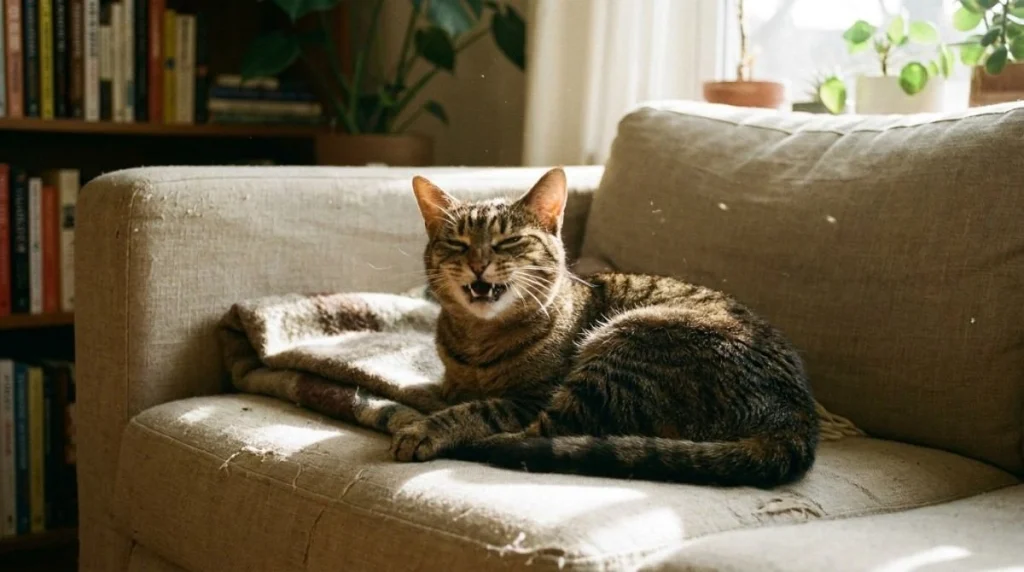
Allergy or Cat Sneezing? How to Tell Them Apart
This is the question most owners actually want answered. Here’s a simple way to compare the two.
Signs that point to allergies:
- Discharge is clear and thin
- Both eyes are affected evenly
- Your cat still eats and plays normally
- Symptoms fade once the trigger is gone (new litter, candle, cleaning spray)
Signs that point to a cat sneezing:
- Discharge may start clear and turn thicker or colored
- Sneezing happens through the whole day, not just in bursts
- Appetite may drop
- Other cats in the home start showing signs too, since colds spread easily
True allergies are actually less common in cats than in dogs or people. So if you’re not sure, a mild viral cold is the more likely answer.
What If Only One Eye Is Watery?
A single watery eye tells a different story than two watery eyes. When just one eye is affected, the cause is usually local to that eye, not a body-wide virus.
Common reasons for one watery eye include:
- A speck of dust, litter, or a plant seed stuck under the eyelid
- A small scratch on the eye from play or a scuffle with another cat
- A blocked tear duct, which lets tears spill onto the face instead of draining away
- Early conjunctivitis, which sometimes starts in one eye before spreading
If your cat is also squinting, pawing at the eye, or holding it half-closed, treat this as a same-day concern. Eyes heal slowly if a problem is left alone too long.
Safe Home Care for a Sneezing Cat With Watery Eyes
If your cat is bright, eating well, and just a little snuffly, gentle home care is a fair first step for the first few days.
- Wipe gently. Use a warm, damp, unscented cloth to clean discharge from the eyes and nose. Use a clean part of the cloth for each eye.
- Add moisture to the air. Run a cool-mist humidifier, or let your cat sit in a steamy bathroom for a few minutes. This loosens up stuffy noses.
- Warm up wet food. A stuffy nose makes it hard to smell food, and smell drives appetite in cats. Slightly warmed food often tempts a picky eater back to the bowl.
- Keep fresh water close by. Staying hydrated helps thin out mucus and speeds up recovery.
- Give your cat a quiet, warm spot to rest. Recovery takes energy, and rest supports the immune system.
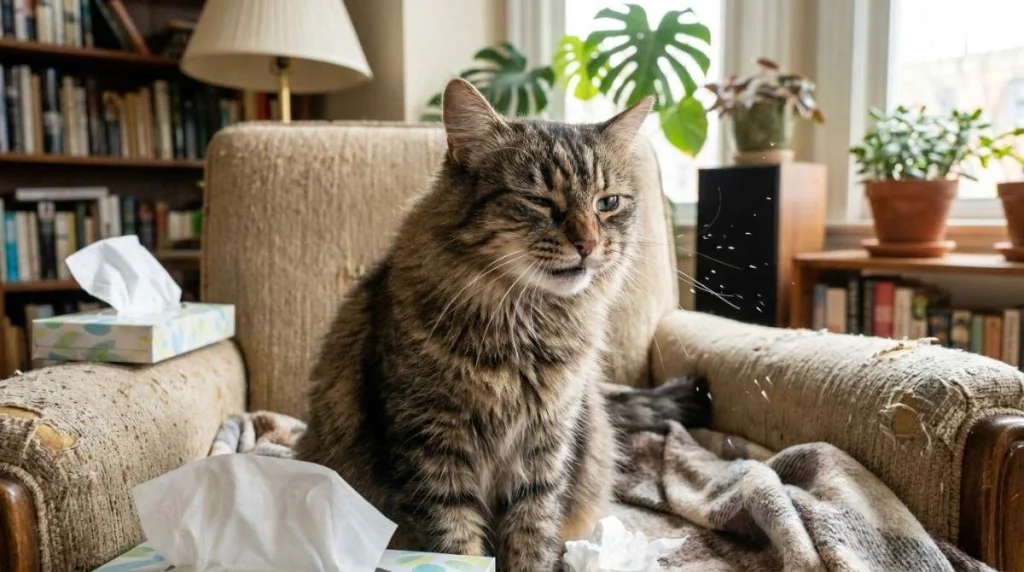
What NOT to Give Your Cat
This part matters more than any home remedy. Never give your cat human medicine, human eye drops, or any leftover pet medication without asking your vet first. Many products that are safe for people are dangerous for cats, even in small amounts.
- Do not use decongestants made for humans.
- Do not use human eye drops, including redness-relief drops.
- Do not guess a dose of Benadryl on your own. A vet may allow it in some allergy cases, but only at a very specific, calculated amount.
- Do not delay a vet visit because you’re trying a home remedy that isn’t working.
If your cat needs medicine, your vet will choose the right one based on an actual exam, not a guess.
Red Flags: When to Call the Vet
Most cats with a sneeze and a watery eye do fine with a little patience. But certain signs mean it’s time to stop waiting and call your vet.
Call promptly if you notice:
- No appetite for more than 24 hours
- Lethargy, or your cat hiding more than usual
- Labored or open-mouth breathing — this is an emergency
- Thick yellow, green, or bloody discharge
- Vomiting or diarrhea alongside the sneezing
- Sneezing that won’t stop after a week or keeps getting worse
- Squinting or an eye that looks painful
Any single one of these signs is reason enough to make the call. You don’t need all of them at once.
Kittens, Senior Cats and Flat-Faced Breeds Need Extra Care
Age and breed change how seriously you should take these symptoms.
Kittens get dehydrated fast and can stop eating quickly once their nose is blocked. A sneezy kitten with watery eyes should see a vet sooner rather than later, especially if under six months old.
Senior cats are more likely to have hidden issues like dental disease or, rarely, a growth inside the nose. Use a shorter waiting period before calling the vet for an older cat. Pet care
Flat-faced breeds, like Persians and Himalayans, naturally tear more because of their face shape. Some daily tearing can be normal for these cats. Still, any sudden increase or a new smell from the discharge is worth mentioning to your vet.
Cat Sneezing and Watery Eyes in the US
Seasonal allergy patterns
Cats in the Southeast and Gulf Coast face high mold and pollen counts almost year-round because of the humid climate. In the Midwest and Northeast, ragweed season in late summer and early fall often brings a spike in sneezing cats. Out West, dry air and wildfire smoke in late summer can irritate a cat’s nose and eyes even if allergies aren’t usually a problem for that cat.
When to use emergency care
Most US cities have a 24-hour animal emergency hospital. If your cat is breathing with an open mouth, has blue-tinged gums, or collapses, this is the time to use it. Regular vet clinics are the right choice for everything on the “call the vet” list above that isn’t a breathing emergency.
How Vets Diagnose and Treat the Cause
A vet visit for this issue usually starts simply. Your vet will check your cat’s eyes, nose, mouth, and chest, and ask when the symptoms started. From there, they may:
- Use a special dye to check the eye’s surface for scratches
- Look inside the nose for anything stuck or unusual
- Run bloodwork if your cat seems more broadly unwell
- Recommend imaging in rare, stubborn one-sided cases
Treatment depends entirely on the cause. A viral cold often just needs supportive care, sometimes with an antiviral for tough cases. A bacterial infection may need antibiotics. Eye problems might need a prescription ointment. Allergies are managed mainly by removing the trigger at home.
FAQs:
Q1: What does it mean when a cat is sneezing and has a watery eye?
It usually means a mild upper respiratory infection, often called a cat cold. Less often, it points to allergies, an eye irritation, or in rare cases a dental or nasal problem. Most cases clear up within a week with rest and gentle home care.
Q2: What are the most common cat sneezing and watery eyes causes?
The two leading causes are viral upper respiratory infections (from feline herpesvirus or calicivirus) and environmental allergies from dust, pollen, or smoke. Eye-specific issues like conjunctivitis or a scratched cornea can also cause both symptoms together.
Q3: Should I take my cat to the vet for sneezing and watery eyes?
See a vet if your cat stops eating for over a day, seems tired or weak, breathes with an open mouth, has thick colored discharge, or the symptoms last beyond ten days. Otherwise, home care for a few days is a reasonable first step.
Q4: How long does a cat cold with sneezing and watery eyes usually last?
Most mild cases clear up in seven to ten days with rest, warmth, and good nutrition. Kittens and senior cats may take a bit longer and should be watched more closely.
Q5: Can I give my cat human medicine for sneezing and watery eyes?
No. Human decongestants and eye drops can be dangerous for cats. Only give medication that your vet has specifically approved and dosed for your cat.
Q6: Is a cat sneezing with watery eyes contagious to other cats?
Yes, if the cause is viral or bacterial. It can spread easily between cats through sneezes and shared bowls. It is not contagious to humans or dogs.
Q7: Why does only one of my cat’s eyes look watery?
A single watery eye usually points to something local, like a scratch, trapped debris, or a blocked tear duct, rather than a body-wide illness. If your cat is also squinting or pawing at that eye, book a vet visit soon.