

How many teeth do dogs have? Adults have 42, puppies have 28. See the easy chart, teething timeline, and signs your dog’s mouth needs a vet.
How Many Teeth Do Dogs Have? A Simple Guide for Dog Owners
So, how many teeth do dogs have? A grown dog has 42 adult teeth. A puppy has 28 tiny baby teeth. That means your dog has ten more teeth than you do. No wonder they smile so big!
Peek inside your dog’s mouth and you will see teeth of all shapes. Some are sharp and pointy. Some are flat. Each one has its own job. In this guide, you will learn the exact count, what every tooth does, and when puppies lose their baby teeth. You will also learn how to keep your dog’s mouth healthy, and what a dental visit can cost at a vet in the US.
We kept the words simple on purpose. Anyone can follow along, from a new puppy owner to a kid doing a school project. This guide is for learning. It does not replace advice from your own vet.
Teeth at a Glance: Puppy vs. Adult Dog vs. Person
| Tooth type | Puppy (baby teeth) | Adult dog | Adult person |
| Incisors (front) | 12 | 12 | 8 |
| Canines (fangs) | 4 | 4 | 4 |
| Premolars | 12 | 16 | 8 |
| Molars (back) | 0 | 10 | 12 |
| Total | 28 | 42 | 32 |
Good to know: Dogs do not grow wisdom teeth. A person’s 12 molars include 4 wisdom teeth.
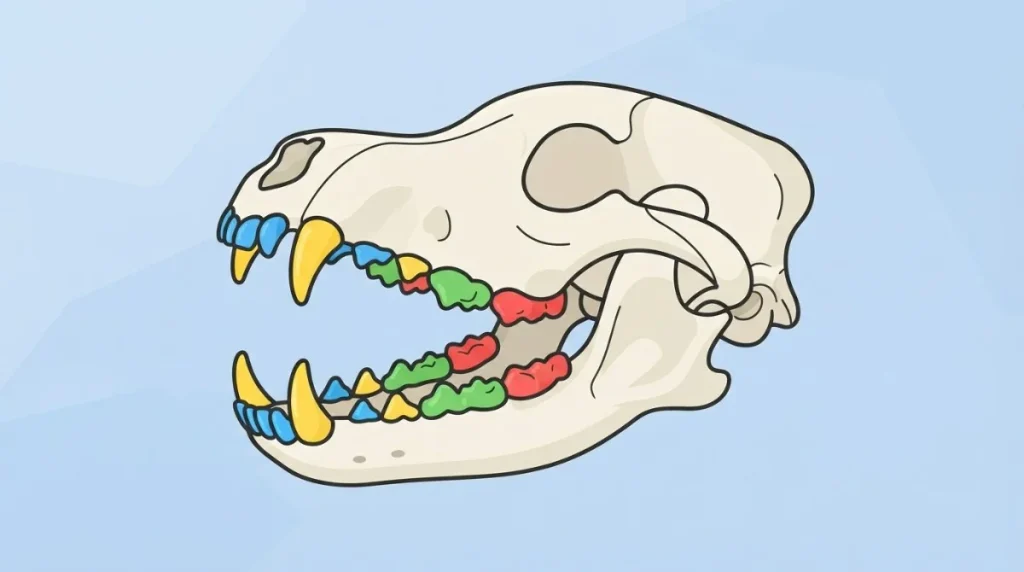
How Many Teeth Do Dogs Have?
Every healthy adult dog has 42 permanent teeth. This is true for a tiny Chihuahua and a huge Great Dane. A small dog just fits all 42 into a smaller mouth. Wolves have 42 teeth too, so your couch-loving pup shares the same number with its wild cousins.
How Many Teeth Do Dogs Have in Each Jaw?
The top jaw holds 20 teeth. Vets call it the maxilla. The bottom jaw holds 22 teeth. Vets call it the mandible. The bottom jaw has two extra teeth because it has one more molar on each side.
Here is the full count:
- 12 incisors (6 on top, 6 on the bottom)
- 4 canines (2 on top, 2 on the bottom)
- 16 premolars (8 on top, 8 on the bottom)
- 10 molars (4 on top, 6 on the bottom)
Add them up and you get 42.
The Secret Code Vets Use: The Dental Formula
Vets write the tooth count as a short code called the dental formula. For adult dogs, it looks like this:
2 × (I 3/3, C 1/1, P 4/4, M 2/3) = 42
It looks tricky, but it is easy. I means incisors. C means canines. P means premolars. M means molars. The top number is for the upper jaw. The bottom number is for the lower jaw. The code shows only one side of the mouth. The other side is a mirror, so you multiply by 2.
Puppies have their own formula: 2 × (I 3/3, C 1/1, P 3/3) = 28. Look closely. There is no M. Puppies have no baby molars.
How Many Teeth Do Puppies Have?
Puppies are born with smooth gums and no visible teeth. At about 3 to 4 weeks old, tiny baby teeth start to poke through. Vets also call them deciduous teeth or milk teeth.
By about 8 weeks, most puppies have all 28. That is 14 on top and 14 on the bottom. They have 12 incisors, 4 canines, and 12 premolars.
Baby teeth are small and very sharp. Ouch! That is why a puppy’s playful nibble can feel like a tiny pin. Nature made them that way to help puppies start eating solid food. But baby teeth are not built to last. As the jaw grows, they make room for bigger permanent teeth. So the answer to “how many teeth do dogs have?” depends on age: 28 for puppies, 42 for adults.

The 4 Types of Dog Teeth and What They Do
Incisors: The Front Nibblers
The 12 incisors sit at the very front. They are small and neat. Dogs use them to pick up small things, scrape meat off a bone, and nibble itchy spots. You may see your dog use them to pull a flea or a bit of dirt out of their fur.
Canines: The Fangs
The 4 canines are the long, pointed teeth. Dogs use them to grab, hold, and tear. They also help carry a favorite toy. A big part of each canine is hidden below the gumline, where a long root holds it in place. That is why a broken canine needs a vet’s care.
Premolars: The Scissors
The 16 premolars sit behind the canines. They have sharp edges. They cut and shred food, like a pair of scissors. Watch your dog chew a treat. They often tilt their head and use the side of the mouth. That is the premolars at work.
Molars: The Crushers
The 10 molars sit at the very back. They are flatter and wider. Dogs use them to crunch hard things, like kibble. Puppies have no baby molars, so these teeth only show up when the adult teeth grow in.
Carnassial Teeth: The Super Scissors
Four of your dog’s teeth do extra hard work. They are called the carnassial teeth. On each side of the mouth, the big upper premolar and the first lower molar slide past each other like scissor blades. Together they slice through tough food. Because they work so hard, these teeth often show the most wear.
How Many Teeth Do Dogs Have at Each Age? The Teething Timeline
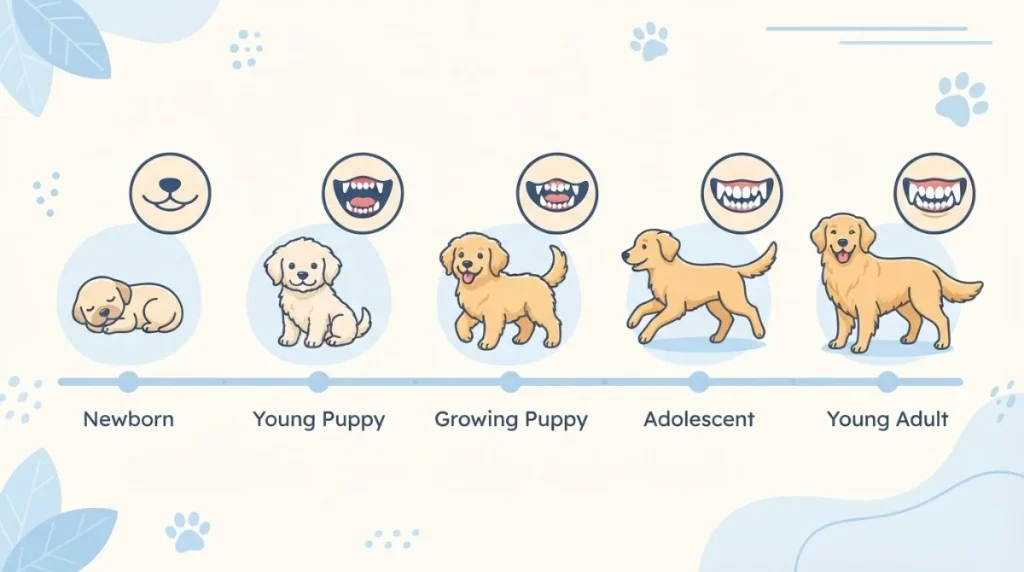
Teething happens twice. First the baby teeth come in. Later they fall out and adult teeth take over. Here is a simple guide:
- Birth: No visible teeth.
- 3 to 4 weeks: The first baby teeth appear.
- About 8 weeks: All 28 baby teeth are in.
- 3 to 4 months: Baby teeth start to fall out. New adult front teeth come in.
- 4 to 6 months: Adult canines and premolars grow in.
- 5 to 7 months: The new molars appear.
- About 7 months: Most dogs have all 42 adult teeth.
You may see different ages on different websites. One might say 3 to 7 months. Another might say 6 to 8. That is because every puppy grows at its own speed. Small breeds are often a little slower. Most vet guides agree that a full set of 42 is in by about 6 to 7 months.
How to Help a Teething Puppy
Sore gums make puppies chew on everything. Give them safe toys made for teething. A soft rubber toy works well. A chilled, wet washcloth is a nice treat too. Skip hard bones, antlers, and hooves. They can crack young teeth.
Do not panic if you find a tiny tooth on the floor. Puppies swallow baby teeth all the time, and it is usually harmless. If you see a lot of blood, or your puppy stops eating, call your vet.
How to Count Your Dog’s Teeth at Home
Want to check for yourself? Go slow and stay gentle.
- Pick a calm time, like after a walk.
- Give a treat so your dog links the mouth check with something good.
- Lift the lip on one side. Do not force the mouth open.
- Count the front teeth first, then the fang, then the side teeth.
- Stop right away if your dog growls, pulls away, or looks upset.

It is hard to see every back tooth on a wiggly dog, so do not worry if your count is a little off. If you count far fewer than 42, or a tooth looks broken, red, or loose, ask your vet to take a look. A vet can count every tooth during an exam. X-rays show what is hiding below the gums.
Do All Dogs Really Have 42 Teeth?
Most guides answer “how many teeth do dogs have?” with one number: 42. That is the normal count. But real dogs can be a little different.
Small Dogs
Small breeds like Chihuahuas, Yorkies, and Toy Poodles also grow 42 teeth. But their mouths are tiny, so the teeth get crowded. Crowded teeth trap food and plaque, so small dogs often have more dental trouble. They also tend to keep baby teeth longer, which leads to the next topic.
Flat-Faced Dogs
Pugs, Bulldogs, and other short-nosed breeds have short jaws. Their teeth can twist or overlap. Regular mouth checks matter even more for these pups.
Retained Baby Teeth
Sometimes a baby tooth does not fall out. The adult tooth grows in right beside it. Owners often call these “double teeth.” The two teeth crowd each other and trap food. This can lead to gum trouble. It is most common with canines, and small breeds are more likely to have it. If a baby tooth is still there when your dog is about 6 to 7 months old, call your vet. Removal is often the fix.
Missing or Extra Teeth
Some dogs never grow one or two teeth. Others grow an extra one. This is not always a problem, but X-rays can show what is going on. If your adult dog has 40 teeth, or 44, ask your vet to be sure.
How Many Teeth Do Dogs Have Compared With People and Cats?
Dogs have more teeth than people. Adult dogs have 42. Adult people have 32. Adult cats have 30, and kittens have 26 baby teeth.
Dogs and people both get two sets of teeth. But a puppy swaps its whole set in a few months. A child takes years.
There is one more big difference. People worry about cavities. Dogs rarely get cavities the way we do. Dogs are far more likely to get gum disease.
Why Do Dogs Lose Teeth?
Losing baby teeth is normal for puppies. But adult dogs should keep all their teeth for life. When an adult dog loses a tooth, something is wrong. Here are the top reasons.
Gum Disease
The most common cause is periodontal disease. It starts when plaque, a sticky film of germs, builds up on the teeth. Plaque hardens into tartar. Tartar irritates the gums. Over time the gums pull away and the tooth gets loose. Vets often say about 80% of dogs show signs of gum disease by age 3. Germs from a sick mouth can also travel to the heart, liver, and kidneys.
Broken Teeth
Chewing very hard things can crack or break teeth. Common troublemakers are bones, antlers, hooves, rocks, and hard nylon chews.
Wear and Decay
Dogs use their mouths like hands. They carry, dig, and chew. Over the years, this wears teeth down. Small breeds and Greyhounds are known for losing teeth faster than other dogs.
The good news is that dogs can eat well even with missing teeth. But a bad tooth hurts. Fixing it is kinder than waiting.
How to Keep All 42 Teeth Healthy
Brush Every Day
US vet groups, such as the American Veterinary Dental College (AVDC), say daily brushing is the best home care. Use a soft brush and a toothpaste made for dogs. Never use human toothpaste. Some kinds contain xylitol, which is toxic to dogs.
Start slow. Let your dog lick the paste. Then touch a few teeth. Then brush a few. If every day feels like too much, a few times a week is much better than none.
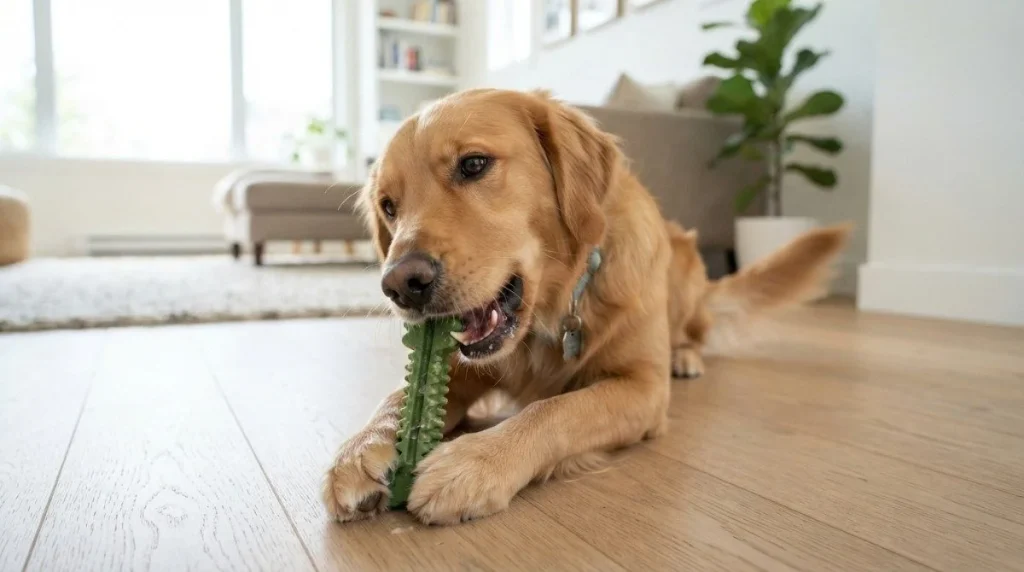
Choose Safe Chews
Look for the VOHC seal. VOHC stands for Veterinary Oral Health Council. ProducSmall breeds like Chihuahuas, Yorkies, and Toy Poodlests with the seal have been shown to help slow plaque or tartar. Dental chews are a good helper, but they do not replace brushing.
Try the thumbnail test. If you cannot press a dent into the chew with your thumbnail, it is too hard for teeth.
Visit the Vet Once a Year
Ask your vet to check your dog’s mouth at every yearly exam. February is National Pet Dental Health Month in the US, so it makes a handy reminder.
If your vet finds tartar under the gums, your dog may need a professional cleaning. Vets do this under anesthesia. That way they can clean below the gumline and take X-rays. Many US clinics charge about $300 to $700 for a routine cleaning. X-rays and pulled teeth cost extra. Prices change by city and clinic, so ask for a written estimate first.
You may see cheaper “anesthesia-free” cleanings. They cannot clean below the gumline, which is where disease hides. Ask your vet if that choice is right for your dog.
Signs Your Dog’s Mouth Needs a Vet
Call your vet soon if you notice:
- Bad breath that keeps getting worse
- Red, swollen, or bleeding gums
- Yellow or brown crust on the teeth
- Loose, broken, or missing teeth
- More drooling than usual
- Pawing at the mouth or face
- Dropping food, or chewing on one side only
- Swelling under an eye
- Less interest in food or toys
Do not wait until your dog stops eating. Early care is easier and often cheaper.
Fun Facts About Dog Teeth
- Puppies are born with no visible teeth.
- A puppy loses all 28 baby teeth and ends up with 42 adult ones.
- Wolves have the same 42 teeth as dogs.
- Dog teeth are living tissue, just like yours.
Final Thoughts
So, how many teeth do dogs have? Adult dogs have 42, and puppies have 28. Now you also know what each tooth does, when puppy teeth change, and how to spot trouble early.
A healthy mouth is part of a healthy, happy dog. A few simple habits protect all 42 teeth: brush often, pick safe chews, and see your vet each year. If you count fewer teeth than you expect, or your dog seems to be in pain, talk to your vet.
FAQs
How many teeth do dogs have?
Adult dogs have 42 teeth: 20 on top and 22 on the bottom. Puppies have fewer, with 28 baby teeth. This number is the same for almost all breeds, big or small.
How many teeth do dogs have at different ages?
Puppies are born with no teeth. Their 28 baby teeth come in at about 3 to 6 weeks old. By 6 to 7 months, these fall out and 42 adult teeth take their place.
How many teeth do dogs have vs humans?
Dogs have 42 adult teeth, and humans have 32. That is 10 more for dogs. Dogs also have sharper, pointier teeth for tearing food, while human teeth are flatter for chewing.
How many teeth do small dogs have, like Chihuahuas and Shih Tzus?
Small dogs also have 42 adult teeth, including Chihuahuas and Shih Tzus. But their mouths are tiny, so teeth can get crowded. Baby teeth sometimes stay in too long, and some small dogs end up with missing or extra teeth.
What types of teeth do dogs have?
A dog’s mouth has four kinds of teeth:
Incisors: 12 small front teeth for nibbling
Canines: 4 long fangs for gripping
Premolars: 16 teeth for cutting and shearing
Molars: 10 back teeth for crushing
How many teeth can a dog have removed?
There is no set limit. A vet removes only the teeth that are sick, broken, or loose. Many dogs eat and live happily after even a full-mouth extraction. Your vet will decide what is safe for your dog.
How many teeth do cats have compared to dogs?
Adult cats have 30 teeth, and adult dogs have 42. Kittens have 26 baby teeth, while puppies have 28. Dogs have more molars because they eat a wider range of foods.